
How AI Is Changing Engineering Management
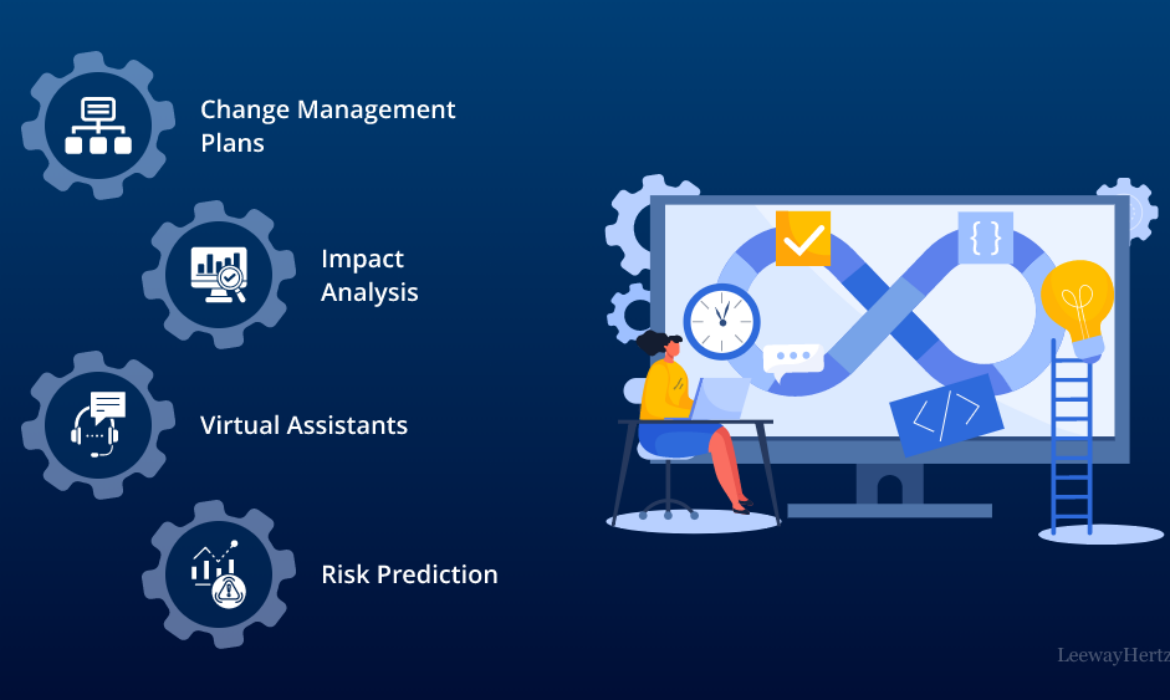
Artificial intelligence is transforming software development at an unprecedented pace. While much of the conversation has focused on AI-assisted coding, code generation, and automated testing, another major shift is happening behind the scenes: AI is redefining engineering management.
Today’s engineering leaders oversee increasingly complex organizations with distributed teams, multiple products, rapid release cycles, and growing expectations from the business. Keeping track of delivery progress, team health, technical risks, and operational performance has become more challenging than ever.
AI is helping engineering managers move beyond manual reporting and reactive decision-making. By analyzing engineering data at scale, identifying patterns, and surfacing actionable insights, AI enables leaders to make faster, more informed decisions without increasing oversight or micromanagement.
Rather than replacing engineering leadership, AI is becoming a powerful tool that enhances it.
Why Engineering Management Needs AI
Modern engineering organizations generate vast amounts of data every day.
Every commit, pull request, deployment, build, test run, incident, and project update contributes valuable information about how software is being developed. However, manually reviewing this data is neither practical nor scalable.
Engineering managers often face questions such as:
- Which projects are at risk of missing deadlines?
- Where are development bottlenecks forming?
- Which teams need additional support?
- Is software quality improving or declining?
- Are engineering investments producing measurable results?
Without AI, answering these questions often requires multiple dashboards, manual reports, and extensive meetings.
AI can process large volumes of engineering data in seconds, allowing leaders to focus on solving problems instead of collecting information.
Detecting Delivery Risks Before They Become Problems
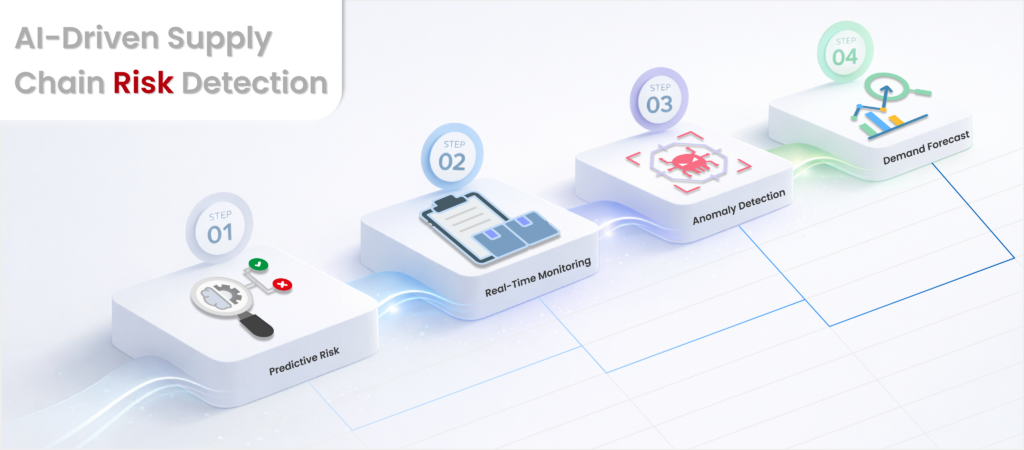
One of AI’s most valuable contributions is its ability to identify risks early.
Instead of waiting until deadlines are missed or releases fail, AI can recognize patterns that often precede delivery issues.
For example, AI may detect:
- Growing pull request backlogs
- Increasing cycle times
- Declining deployment frequency
- Repeated build failures
- Unusually large feature branches
- Rising technical debt indicators
Rather than simply reporting historical data, AI helps engineering leaders anticipate potential challenges and take action before they affect customers or business objectives.
This proactive approach reduces firefighting and improves delivery predictability.
Identifying Workflow Bottlenecks
Engineering teams frequently lose productivity due to hidden workflow inefficiencies.
AI can analyze development pipelines to identify where work consistently slows down.
Common bottlenecks include:
- Delayed code reviews
- Slow testing pipelines
- Manual deployment approvals
- Long-lived branches
- Uneven workload distribution
- Repeated infrastructure failures
Instead of relying on anecdotal feedback, managers receive data-driven recommendations about which processes deserve attention.
Small workflow improvements identified by AI can significantly increase overall delivery speed across an organization.
Summarizing Engineering Trends Automatically
Engineering leaders often spend considerable time reviewing dashboards, preparing reports, and communicating project status to executives.
AI can automate much of this work.
Rather than presenting raw metrics, AI generates concise summaries that highlight:
- Delivery improvements
- Emerging risks
- Quality trends
- Incident patterns
- Changes in deployment performance
- Areas requiring leadership attention
For example, instead of reviewing dozens of charts, a manager might receive a summary stating:
- Lead time improved by 18% this month.
- Code review delays increased in two engineering teams.
- Production stability remained consistent despite more frequent deployments.
- Testing automation reduced deployment failures.
These summaries allow leaders to focus on strategic decisions rather than assembling reports.
Helping Prioritize Engineering Investments

Engineering organizations constantly face competing priorities.
Should they:
- Hire additional engineers?
- Improve internal tooling?
- Invest in platform engineering?
- Reduce technical debt?
- Expand automation?
- Modernize infrastructure?
AI supports these decisions by identifying which investments are likely to deliver the greatest operational impact.
For instance, analysis may reveal that developers spend more time waiting for slow build pipelines than writing code. In that case, investing in faster infrastructure could improve productivity more than expanding the engineering team.
This evidence-based approach helps organizations allocate resources more effectively.
Supporting Better Team Health
Effective engineering management is about more than delivery metrics.
Healthy, motivated teams are essential for long-term success.
AI can help identify signals that may indicate organizational challenges without evaluating or ranking individual developers.
Examples include:
- Increasing review workloads
- Uneven work distribution
- Persistent delivery delays
- Growing maintenance burdens
- Rising operational interruptions
- Reduced collaboration across teams
These insights allow managers to investigate underlying causes and improve working conditions before problems contribute to burnout or turnover.
The emphasis remains on improving systems and supporting teams—not monitoring individual performance.
Improving Executive Communication
Engineering leaders frequently need to explain technical performance to executives who may not have engineering backgrounds.
AI can translate complex engineering metrics into business-focused insights.
Instead of presenting detailed technical dashboards, leaders can communicate outcomes such as:
- Faster customer feature delivery
- Improved platform reliability
- Reduced operational costs
- Increased release predictability
- Better engineering efficiency
- Lower production risk
This translation helps align engineering initiatives with company goals and enables more productive conversations across departments.
AI as a Decision Support Tool
One of the most important aspects of AI in engineering management is understanding its role.
AI should support decisions—not make them independently.
Engineering leaders still provide the context that AI cannot fully understand, including:
- Business priorities
- Customer expectations
- Team dynamics
- Organizational culture
- Long-term strategic objectives
AI excels at identifying patterns, summarizing information, and highlighting anomalies. Human leaders remain responsible for interpreting those insights and deciding how to act.
The strongest results come from combining AI-powered analysis with human judgment and experience.
Challenges to Consider
While AI offers significant advantages, organizations should approach implementation thoughtfully.
Several challenges deserve attention.
Data Quality
AI recommendations are only as reliable as the data they analyze.
Incomplete, inconsistent, or outdated engineering data can lead to misleading conclusions.
Maintaining accurate development metrics remains essential.
Avoiding Metric Obsession
AI can generate an enormous number of insights, but not every trend requires immediate action.
Leaders should focus on metrics that align with business goals rather than reacting to every fluctuation.
Preserving Trust
Developers may worry that AI is being used to monitor individual productivity.
Successful organizations communicate clearly that AI exists to improve workflows, identify systemic issues, and support better decision-making—not to evaluate employees based on activity metrics.
Transparency is critical to maintaining trust and encouraging adoption.
The Future of AI in Engineering Leadership
As AI continues to evolve, engineering management will become increasingly proactive rather than reactive. Instead of spending valuable time gathering information from multiple tools, leaders will receive intelligent recommendations that highlight risks, explain trends, and suggest opportunities for improvement.
Future AI capabilities are likely to include more accurate delivery forecasting, deeper analysis of engineering workflows, automated identification of recurring operational issues, and increasingly personalized recommendations for improving development processes. Rather than replacing experienced managers, these tools will reduce administrative overhead and provide clearer visibility into complex engineering organizations.
The result will be leaders who spend less time compiling reports and more time mentoring teams, improving engineering systems, and driving strategic initiatives.
Building Smarter Engineering Organizations
Artificial intelligence is changing engineering management by making organizational data more accessible, actionable, and meaningful. Instead of relying solely on intuition or manual reporting, engineering leaders can use AI to detect risks earlier, identify workflow bottlenecks, summarize delivery trends, and connect technical performance with business outcomes.
The greatest value of AI lies not in automating leadership but in enhancing it. By combining data-driven insights with human expertise, organizations can make better decisions, improve software delivery, strengthen collaboration, and create healthier engineering environments.
As engineering teams continue to grow in size and complexity, AI will become an increasingly valuable partner for leaders seeking to build resilient, efficient, and high-performing software organizations.

