
Developer Experience (DevEx): The Hidden Driver of Delivery Speed
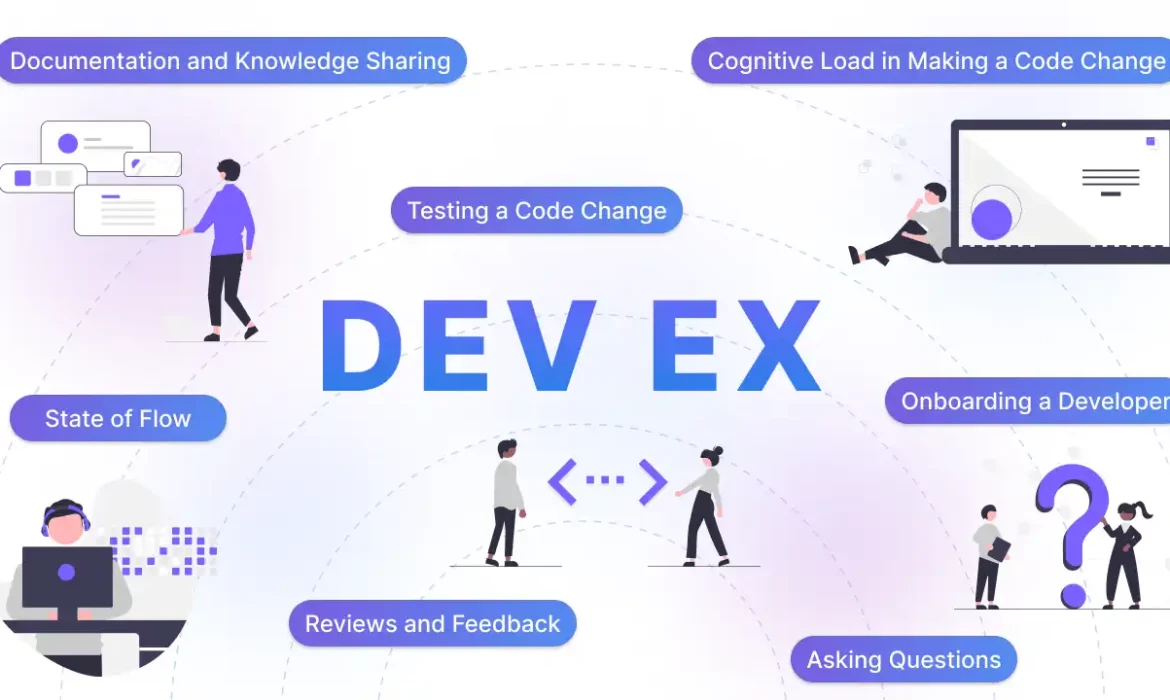
Software development is often viewed through the lens of technical architecture, project management, or engineering talent. While these factors are undeniably important, many organizations overlook one of the biggest influences on engineering performance: Developer Experience (DevEx).
Developer Experience encompasses everything engineers interact with during their daily work—from development environments and deployment pipelines to documentation, internal tools, and team processes. When these systems are intuitive and efficient, developers spend more time solving customer problems and less time navigating unnecessary obstacles.
Improving Developer Experience is not simply about making developers happier. It has a direct impact on delivery speed, software quality, collaboration, and employee retention. As software organizations become more complex, DevEx is emerging as one of the most effective ways to increase engineering productivity without increasing headcount.
What Is Developer Experience?
Developer Experience refers to the overall quality of an engineer’s interaction with the tools, systems, workflows, and processes required to build and maintain software.
A positive Developer Experience enables engineers to:
- Set up development environments quickly
- Access reliable documentation
- Deploy software with confidence
- Resolve issues efficiently
- Collaborate across teams
- Focus on building features instead of fighting infrastructure
Conversely, a poor Developer Experience creates constant friction that slows development and increases frustration.
Even small inefficiencies, when repeated across dozens or hundreds of engineers every day, can result in significant productivity losses.
The Hidden Cost of Engineering Friction
Engineering teams rarely lose productivity because developers lack technical ability.
More often, valuable time disappears through small interruptions such as:
- Waiting for build pipelines
- Searching for outdated documentation
- Resolving dependency conflicts
- Navigating complicated deployment processes
- Waiting for code reviews
- Troubleshooting inconsistent development environments
Each interruption may seem minor on its own, but together they create substantial delays.
For example, if every engineer loses just 30 minutes each day due to workflow friction, a team of 50 developers loses hundreds of engineering hours every month. That lost time could otherwise be spent delivering features, fixing bugs, or improving software quality.
Reducing friction is one of the fastest ways to improve overall engineering performance.
Faster Developers Build Better Software
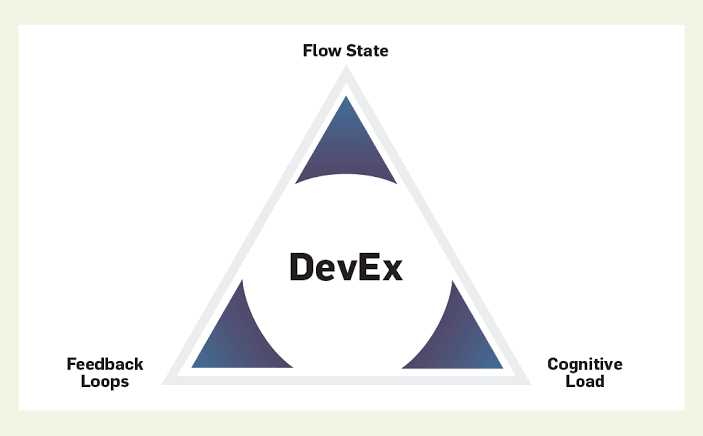
Speed and quality are often treated as competing priorities, but Developer Experience demonstrates that they can improve together.
When engineers spend less time dealing with operational obstacles, they gain more time for activities that enhance software quality, including:
- Thoughtful system design
- Comprehensive testing
- Code refactoring
- Peer collaboration
- Documentation
- Performance optimization
Instead of rushing through repetitive tasks, developers can focus on solving complex problems and creating maintainable solutions.
As a result, organizations often experience both faster delivery cycles and more reliable software.
Why Internal Tools Matter More Than You Think
Organizations frequently invest heavily in customer-facing products while neglecting the tools their own engineers use every day.
Internal developer platforms, deployment systems, CI/CD pipelines, testing frameworks, and documentation portals may not generate revenue directly, but they significantly influence engineering efficiency.
Strong internal tooling can reduce:
- Manual deployment steps
- Configuration errors
- Repetitive setup tasks
- Environment inconsistencies
- Context switching
When developers trust their tools, they spend less time troubleshooting and more time delivering customer value.
Investing in internal platforms is therefore an investment in long-term engineering productivity.
Developer Experience Improves Delivery Velocity
One of the clearest benefits of DevEx is faster software delivery.
Teams with streamlined workflows typically experience improvements in:
Lead Time
Developers move work from planning to production more quickly because fewer manual processes interrupt delivery.
Cycle Time
Code progresses through development, testing, review, and deployment with fewer delays.
Deployment Frequency
Reliable automation encourages smaller, more frequent releases that reduce deployment risk.
Recovery Speed
Improved tooling enables engineers to identify and resolve production issues more efficiently.
These improvements allow organizations to respond faster to customer needs while maintaining operational stability.
Better Workflows Lead to Higher Software Quality
Poor Developer Experience often encourages shortcuts.
When deployment is difficult, testing is slow, or documentation is incomplete, developers naturally look for ways to bypass friction in order to meet deadlines.
This can result in:
- Incomplete testing
- Larger deployments
- Increased technical debt
- More production defects
- Higher maintenance costs
Improving Developer Experience removes many of the incentives for these risky behaviors.
Engineers become more likely to:
- Write automated tests
- Review code thoroughly
- Refactor complex systems
- Improve documentation
- Follow established engineering practices
The result is software that is both more reliable and easier to maintain.
Developer Experience Supports Employee Retention
Hiring experienced software engineers is expensive and highly competitive.
Retaining talented developers is therefore just as important as recruiting them.
Developer Experience plays a significant role in job satisfaction.
Engineers want to spend their time building software—not struggling with inefficient processes or outdated tooling.
Organizations that invest in DevEx often see improvements in:
- Employee engagement
- Job satisfaction
- Team morale
- Collaboration
- Knowledge sharing
- Long-term retention
A smooth development environment signals that leadership values engineering productivity and respects developers’ time.
This contributes to a healthier engineering culture where people are more likely to remain and grow.
Measuring Developer Experience
Although Developer Experience includes subjective elements, it can still be evaluated using meaningful metrics.
Engineering leaders commonly examine indicators such as:
- Development environment setup time
- Build duration
- Deployment success rate
- Code review turnaround time
- Documentation quality
- Developer satisfaction surveys
- Time spent resolving infrastructure issues
Combining operational metrics with developer feedback provides a balanced view of where friction exists and which improvements will have the greatest impact.
The goal is not to measure developers—it is to measure how effectively the engineering environment supports their work.
Building a Culture That Prioritizes DevEx
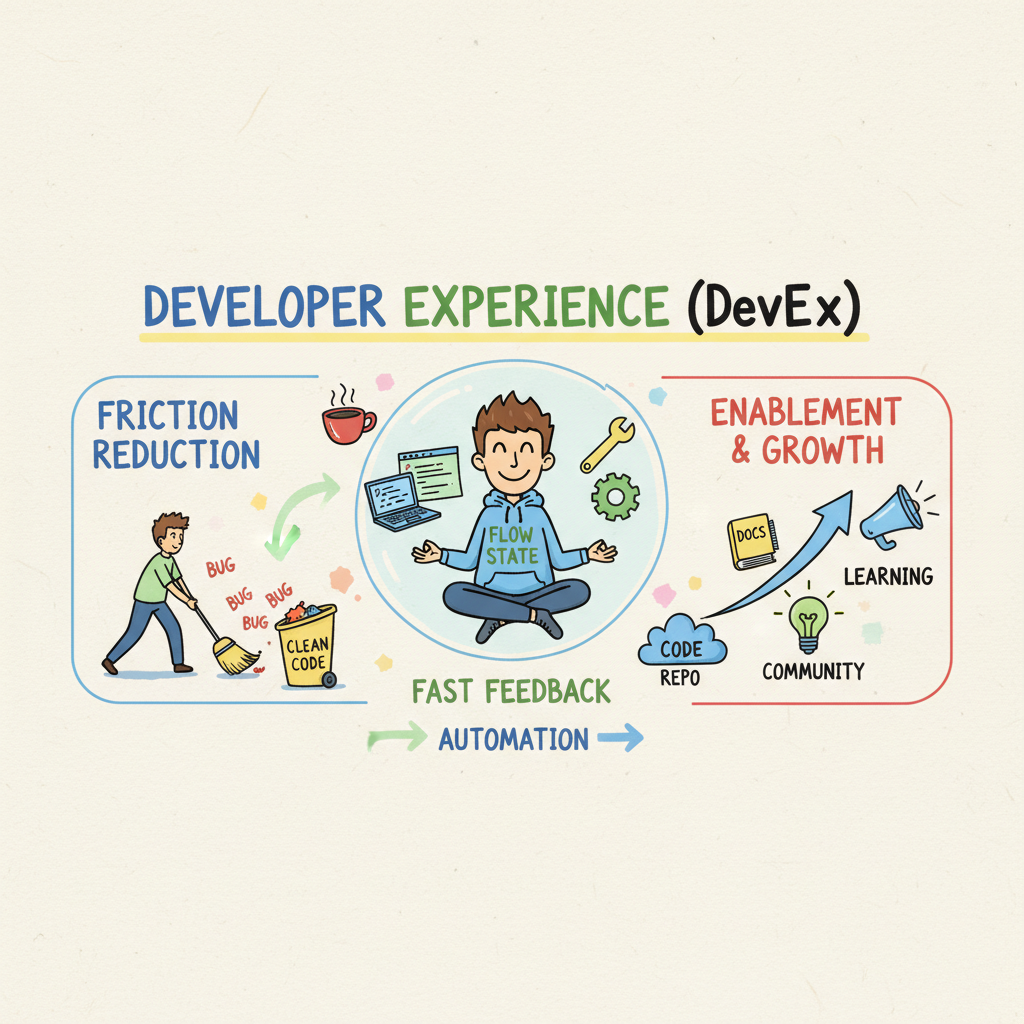
Improving Developer Experience is not a one-time initiative. It requires ongoing attention as systems, teams, and products evolve.
Successful organizations treat DevEx as a strategic priority by:
- Continuously gathering developer feedback.
- Automating repetitive tasks wherever possible.
- Investing in reliable internal platforms.
- Maintaining accurate documentation.
- Simplifying deployment and testing workflows.
- Regularly reviewing engineering processes for unnecessary complexity.
Small improvements made consistently often produce greater long-term gains than large, infrequent transformation projects.
Most importantly, leaders recognize that developer productivity depends not only on individual talent but also on the quality of the environment in which engineers work.
Why Leadership Should Care About Developer Experience
Developer Experience is often perceived as an engineering concern, but its effects extend throughout the business.
A strong DevEx contributes to:
- Faster product delivery
- Higher software quality
- Lower operational costs
- More predictable release schedules
- Improved customer satisfaction
- Better employee retention
These outcomes directly support business growth and competitive advantage.
Engineering leaders who prioritize Developer Experience are not simply improving workflows—they are creating conditions where teams can consistently perform at their highest level.
Turning Developer Experience Into a Competitive Advantage
As software development grows more complex, organizations can no longer rely solely on hiring exceptional engineers to achieve exceptional results. The systems, tools, and processes surrounding those engineers play an equally important role in determining how effectively they deliver value.
Developer Experience is the foundation that enables high-performing teams to move quickly without sacrificing quality. By reducing friction, simplifying workflows, and investing in the tools developers rely on every day, organizations empower engineers to focus on innovation instead of operational obstacles.
The companies that treat Developer Experience as a strategic investment—not just an internal convenience—are better positioned to deliver reliable software faster, retain top engineering talent, and adapt to changing business demands. In an increasingly competitive technology landscape, improving DevEx is no longer a luxury. It is a powerful driver of sustainable engineering success.

